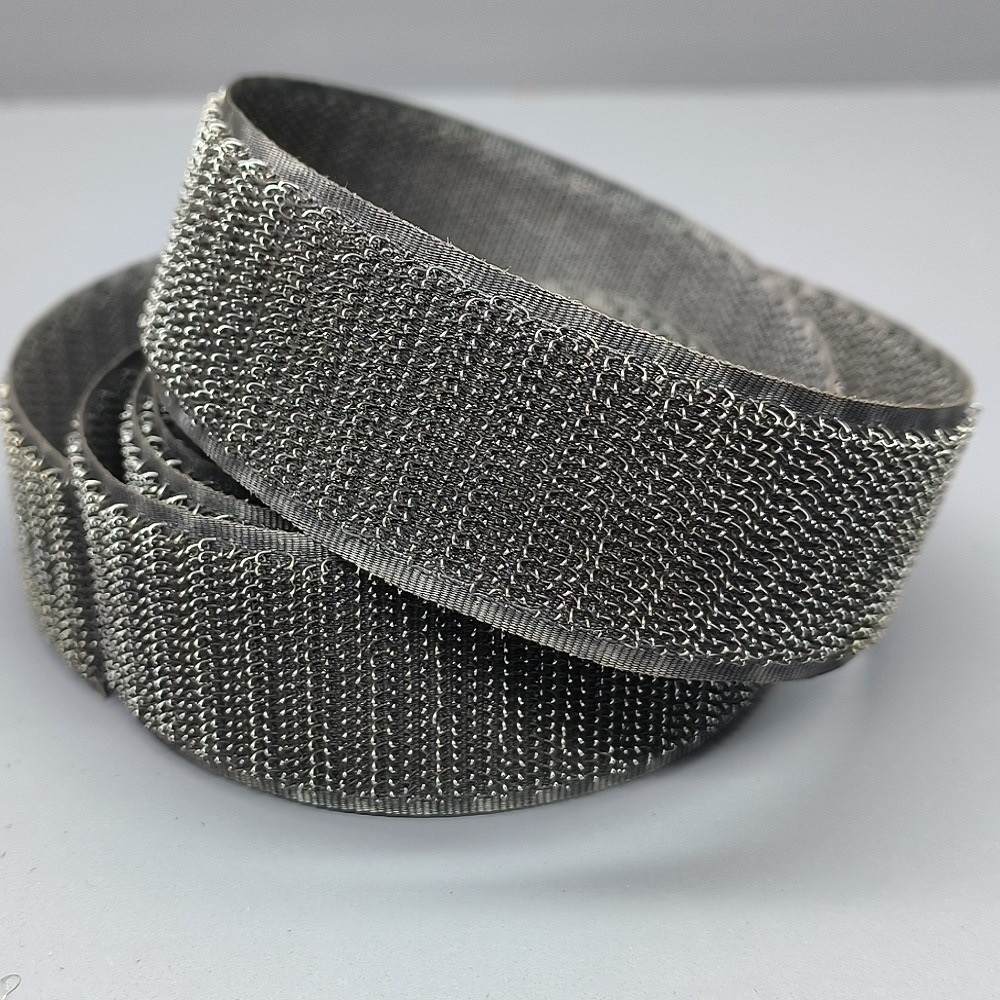
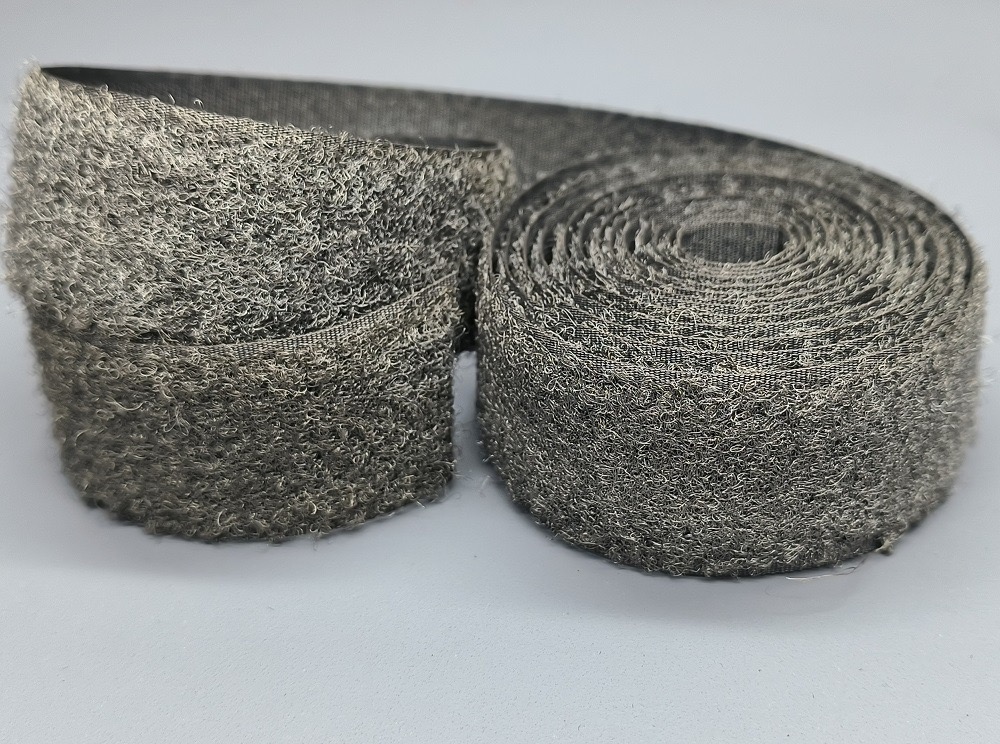
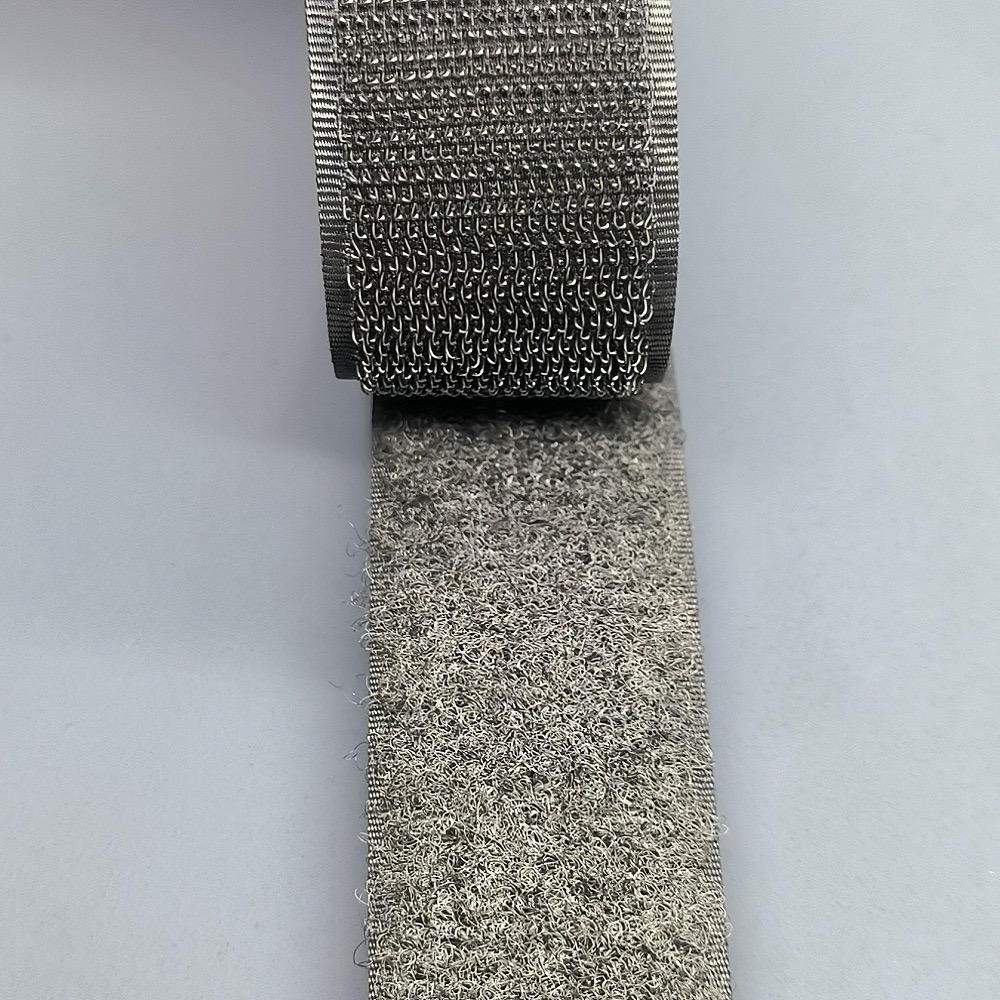
Description


Material | silver hook and loop |
Use | shielding Bags, military tent , anti static shoes |
Size | 25mm width/50mm width/ 100 mm width |
Place of Origin | China |
Product name | conductive hook and loop |
MOQ | 1 meter |
Color | dark brown |
Certification | SGS |
Packing | 25 meters per roll / in rolls |
Material | silver |
Delivery time | 1 meter in 7 business days |
Frequently Asked Questions
The function of a conductive hook and loop is to provide a dual-purpose fastening solution. It combines the mechanical attachment capabilities of traditional hook and loop (like Velcro) with the added benefit of electrical conductivity. This makes it suitable for applications where a secure physical connection and electrical transmission are required.
A conductive loop typically refers to a closed electrical circuit that allows the flow of electric current. In the context of conductive hook and loop, it can indicate a portion of the fastener that contributes to the transmission of electrical signals.
Velcro is a brand name that has become synonymous with hook and loop fasteners. Therefore, there is no functional difference between hook and loop and Velcro. Velcro is a specific brand that produces hook and loop fasteners, but the terms are often used interchangeably.
Hook and loop work by using two components: hooks and loops. The hooks, typically found on one side of the fastener, interlock with the loops on the other side, creating a secure and reusable connection. The engagement of hooks and loops allows for repeated fastening and unfastening.
In a hook and loop system, the hook is the side of the fastener with small, stiff, and often pointed features. The loop, on the other hand, is the softer side with fibers that interlock with the hooks. Together, they form a strong yet easily detachable connection.
The advantages of using hook and loop fasteners include ease of use, reusability, versatility in applications, and the ability to create a strong yet removable connection. They are commonly used in various industries for their convenience and adaptability.
Looping a conductor does not inherently increase resistance. In fact, the resistance of a looped conductor remains the same as that of a straight conductor, assuming the material and dimensions of the conductor remain constant.


